Subscribe to our mailing list and be kept up to date on Home Schooling across America.

*E-Mail Address:
*First Name:
Last Name:
*Subscriber Action:

* Required

We will never pass your information to third parties

Resources Support Group Sign-up
Online School-At-Home

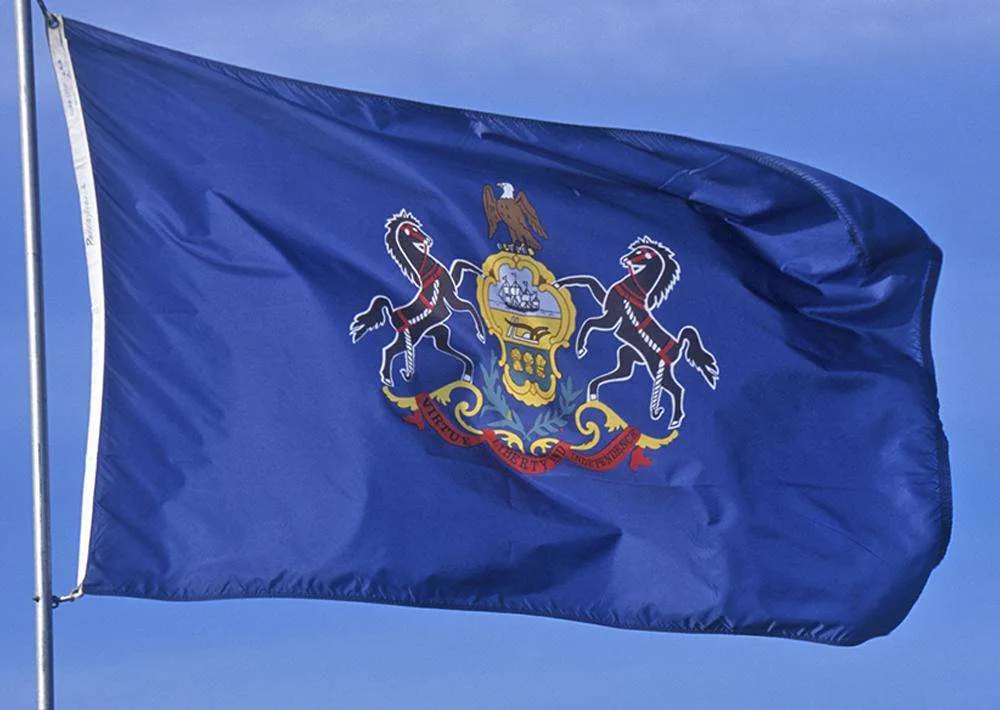
Pennsylvania

• Compulsory Attendance Ages: from the time the child enters school, "which shall not be later than the age of eight (8) years, until the age of seventeen (17) years." (§ 13-1327)

• Required Days of Instruction: 180 days or 900 hours at the elementary level; 180 days or 990 hours at the secondary level. (§ 13-1327.1(c))

• Required Subjects:
   1. Elementary level: English, to include spelling, reading, and writing; arithmetic; history of Pennsylvania and United States; civics; health and physiology; physical education; music; art; geography; science; and safety education, including regular and continuous instruction in the danger and prevention of fires.
   2. Secondary level: English, to include language, literature, speech and composition; science, geography; social studies, to include civics, world history, history of the United States and Pennsylvania; mathematics, to include general mathematics, algebra and geometry; art; music; physical education; health; and safety education, including regular and continuous instruction in the dangers and prevention of fires. (§ 13-1327.1(c)(1)-(2))

• Teacher Qualifications: Parent/supervisor must have a high school diploma or its equivalent if students are not enrolled in a day school. § 13-1327.1(a).

• Standardized Tests: Students not enrolled in a day school must be tested with a nationally normed standardized test for grades 3, 5, 8 and the results submitted with    an annual portfolio. Tests shall not be administered by the child's parent or guardian. § 3-1327.1(e)(1). MAP testing is not required

• Parents have four options to teach their children at home:

   Option I: Home School Statute. (§ 13-1327.1)
   1. Parent/supervisor must file a notarized affidavit with the local superintendent prior to the commencement of the home education program and annually by August 1 thereafter. The affidavit must include:
       a. the name of the parent/supervisor, name and age of children, address, and telephone number;
       b. assurance that subjects are taught in English;
       c. "outline of proposed education objectives by subject area";
       d. evidence of immunization;
       e. receipt of health and medical services required by law;
       f. that the home education program will comply with § 13-1327.1;
       g. a certification that the supervisor, all adults living within the home, and persons having legal custody of the children have not been convicted of certain criminal offenses within the past five years.
           The affidavit "shall be satisfactory evidence" of compliance with the law.
           (§ 13-1327.1(b)(1)) "The required outline of proposed education objectives shall not be utilized by the superintendent in determining if the home education program is out of compliance." (§ 13-1327.1(b)(1)).
   2. Any student who has been identified under the federal Individuals with Disabilities Education Act (IDEA) as needing special education services (excluding those identified as gifted and/or talented) must have his home education program approved by a state-certified special education teacher or a licensed clinical or school psychologist. The written approval must be submitted with the notarized affidavit.
   3. Parent/supervisor must annually maintain and provide the superintendent with "certain documentation. This is due by June 30th:"
       a. a portfolio of records and materials. This includes a "log … which designates reading materials used, samples of any writing, work sheets, workbooks or creative materials used by the student." (§ 13-1327.1(e)(1));
       b. "An annual written evaluation of the student's educational progress" by
           (1) a licensed psychologist
           (2) or, a teacher certified by the state,
           (3) or a non/public school teacher or administrator (who must have at least two years teaching experience in the last ten years in public or nonpublic schools). The evaluation shall be based on an interview and review of the portfolio and "it shall certify whether or not an appropriate education is occurring." (§ 13-1327.1(e)(2))
   4. If the superintendent determines an appropriate education is not taking place, the parent/supervisor has 20 days to submit additional documentation. If there is still a problem, the family has a right of appeal to an impartial hearing examiner and then to the Secretary of Education or the court.
   5. "A home education program shall not be considered a nonpublic school under the provisions of this Act." (§ 13-1327.1(b))

• Alternative Statutes Allowing Home Instruction:

   Option II: Private Tutor. Parents may teach their children at home if they qualify as a "properly qualified private tutor." This is defined as "a person who is certified by the Commonwealth of Pennsylvania to teach in the public schools of Pennsylvania; who is teaching one or more children who are members of a single family; who provides the majority of the instruction to such child or children; and who is receiving a fee or other consideration for such instructional services." The private tutor must file a copy of their Pennsylvania certification and the required criminal history record with the student's district of residence superintendent. (24 P.S. § 13-1327(a))

   Option III: Day School/Church School. Parents may teach their children at home if the home is an extension or satellite of a religious day school. Since the law simply states a child must be "enrolled," parents may "enroll" their child in a religious day school, but teach them at home. According to § 13-1327(b), such a day school must do the following:

   1. "A child enrolled in a day school which is operated by a bona fide church or other religious body, and the parent, guardian or other person having control or charge of any such child or children of compulsory school age shall be deemed to have met the requirements of this section if that school provides a minimum of one hundred eighty (180) days of instruction or nine hundred (900) hours of instruction per year at the elementary level or nine hundred ninety (990) hours per year of instruction at the secondary level and:
       a. At the elementary school level, the following courses are taught: English, to include spelling, reading and writing; arithmetic; science; geography; history of  the United States and Pennsylvania; civics; safety education, including regular and continuous instruction in the dangers and prevention of fires; health and physiology; physical education; music; and art.
       b. At the secondary school level, the following courses are offered: English, to include language, literature, speech and composition; science, to include biology and chemistry; geography; social studies, to include civics, economics, world history, history of the United States and Pennsylvania; a foreign language; mathematics to include general mathematics and statistics, algebra and geometry; art; music; physical education; health and physiology; and safety education, including regular and continuous instruction in the dangers and preventions of fires."

   2. "The notarized affidavit of the principal of any such school, filed with the Department of Education and setting forth that such subjects are offered in the English language in such school, whether it is a nonprofit organization, and that such school is otherwise in compliance with the provisions of this act, shall be satisfactory and sufficient evidence thereof."

   3. "It is the policy of the Commonwealth to preserve the primary right and the obligation of the parent or parents, or person or persons in loco parentis to a child, to choose the education and training for such child. Nothing contained in this act  shall empower the Commonwealth, any of its officers, agencies or subdivisions to approve the course content, faculty, staff or disciplinary requirements of any religious school referred to in this section without the consent of said school." (24 P.S. § 13-1327(b)(2))
   4. Day schools are required to furnish to the local school districts a list of the names and residence of all children between six and 18 years of age enrolled in the school.  This information must be provided at the time of admission of the children to the school. Day schools are also required to report the name and date of withdrawal of any student who is still of compulsory attendance age. Additionally, day schools are supposed to report any child who has been absent from school for three days without lawful excuse. (24 P.S. § 13-1332)
       Groups of home schoolers could organize a school under the auspices of their church. An administrator could be chosen to keep records, the teachers would be the parents, and the school campus would be divided up into each home.

Important Note: According to a Pennsylvania Homeschool Advocate, Option III (umbrella schools), is not really a legal option in PA. It came into existence prior to 1989 and was authorized by an unpublished court decision. Because the court decision was unpublished, a homeschool family might not be successful in using it as a precedent in other cases. At a minimum, this would fall under the category of "school-at-home" programs, not as a legitimate homeschooling option for PA families. Homeschool Facts recommends www.phea.net for the most up-to-date information.

   Option IV: Pennsylvania Religious Freedom Protection Act (RFPA), 71 P.S. 2401, et. seq. As a result of the restrictive home education statute, some homeschoolers have successfully invoked the RFPA, demonstrating a substantial burden on the free exercise of their religious beliefs.

Reference:Click Here


Pennsylvania State High School Graduation Requirements:

Carnegie unit requirements for high school graduation set by each local district. Requirements must "include course completion and grades, completion of a culminating project and results of local assessments aligned with the academic standards...."

22 PA. CODE § 4.24

Important Note: State Graduation requirements are not necessarily the best guideline for homeschoolers to use. They have been included here as a guideline for what a typical public school student would need to complete in order to graduate.

A more important guideline may be the College Entrance requirements for where your student would like to attend college. While colleges have differing requirements, there are many colleges that publish requirements for homeschool graduates.


Related Pages:
Homeschool Support Groups in Pennsylvania
Colleges in Pennsylvania